




A letter from the author of The Greece Map
Dear future Greece homeowner,
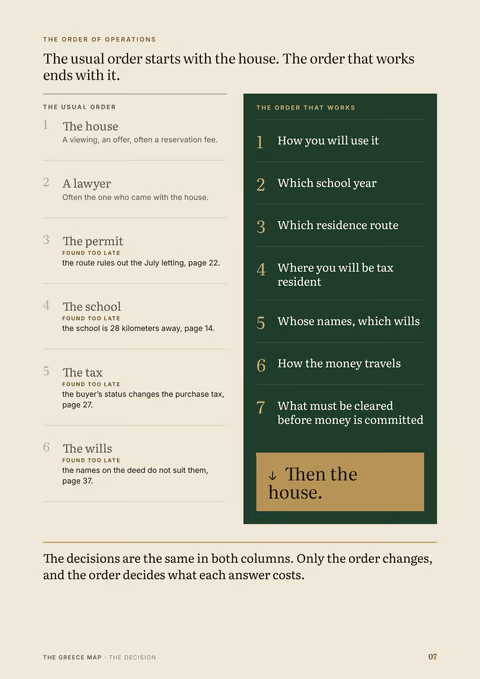
Imagine you have found the house.
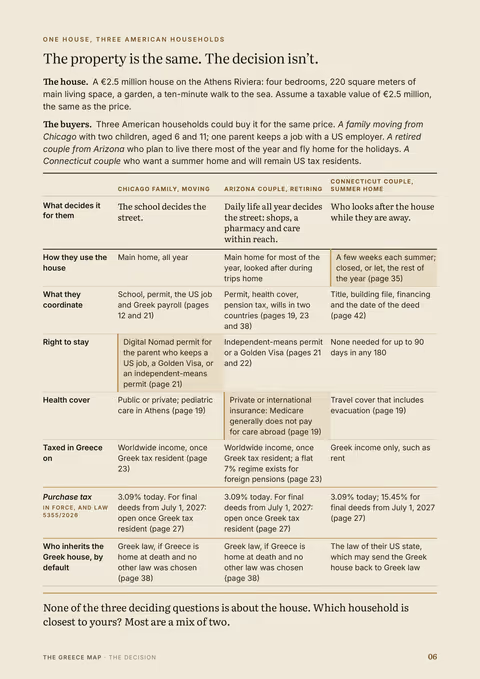
Four bedrooms on the Athens Riviera, a garden, a ten-minute walk to the sea. Or a stone house on Paros where you can already picture the family at the table in August, and perhaps one day all year round. The price fits the budget. The light is better than the photographs. Your agent is enthusiastic.
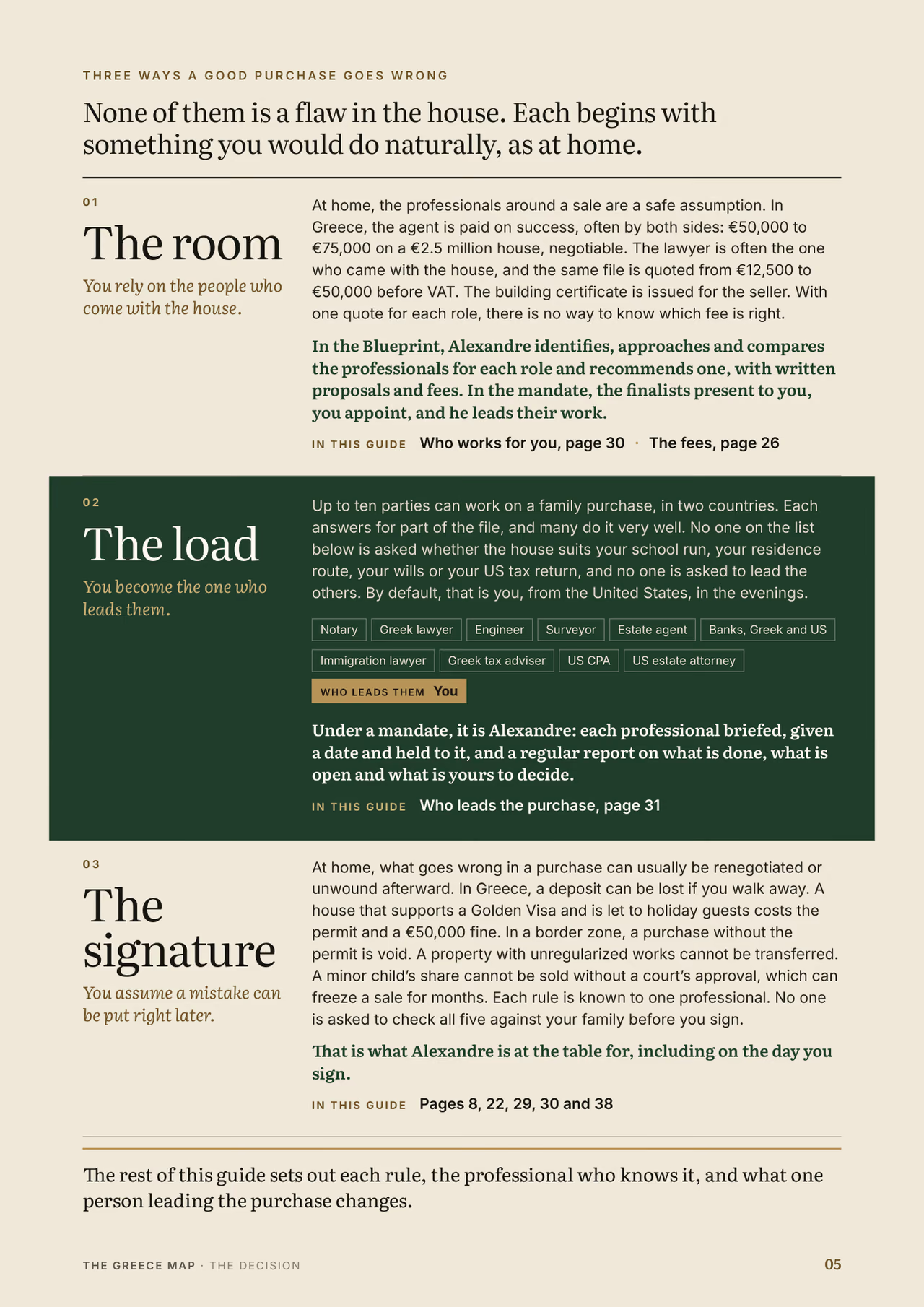
You will do what you would do at home. You will trust the people in the room: take the lawyer the agent suggests, accept the notary you are given, and wire the deposit when you are told it is time.
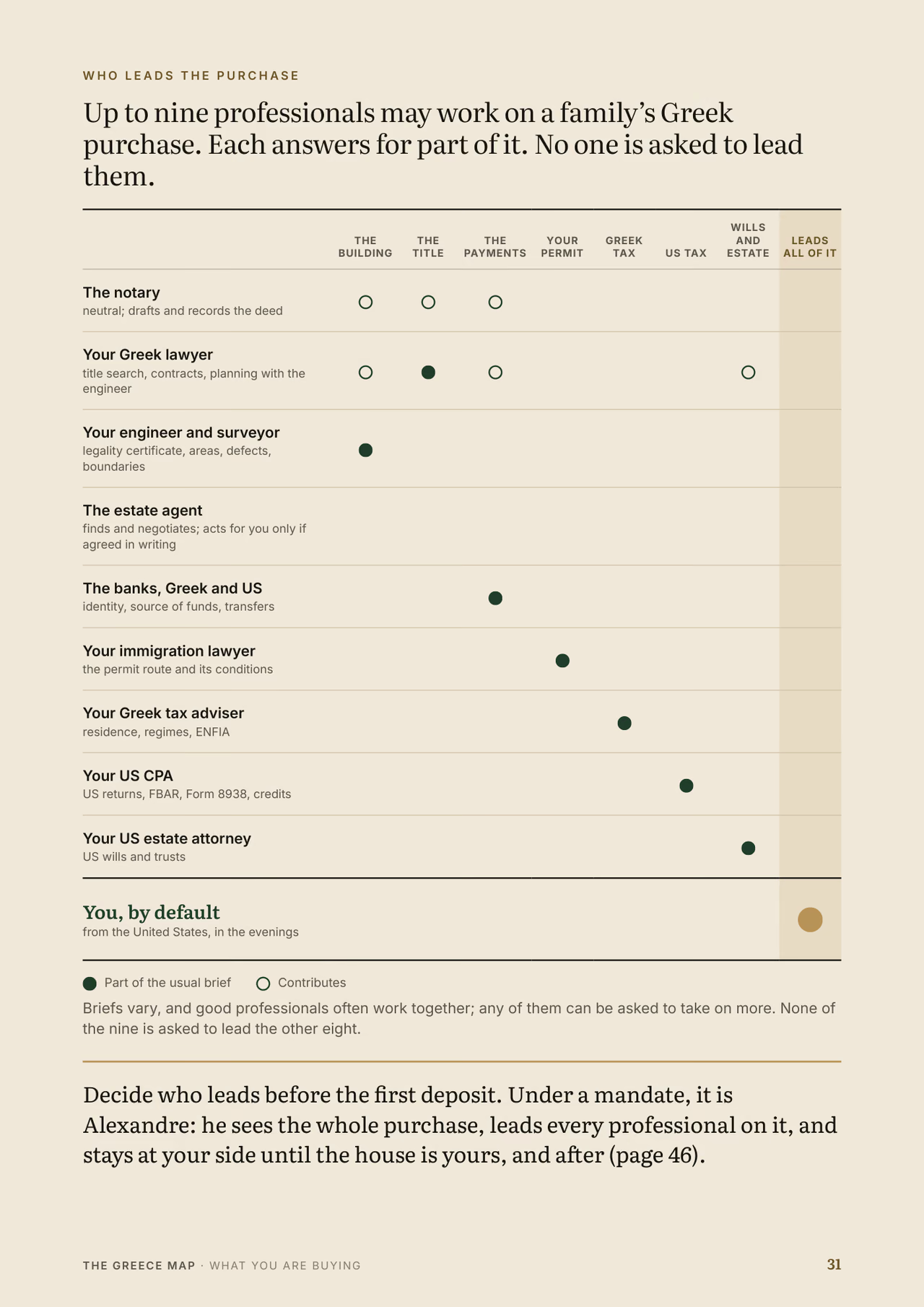
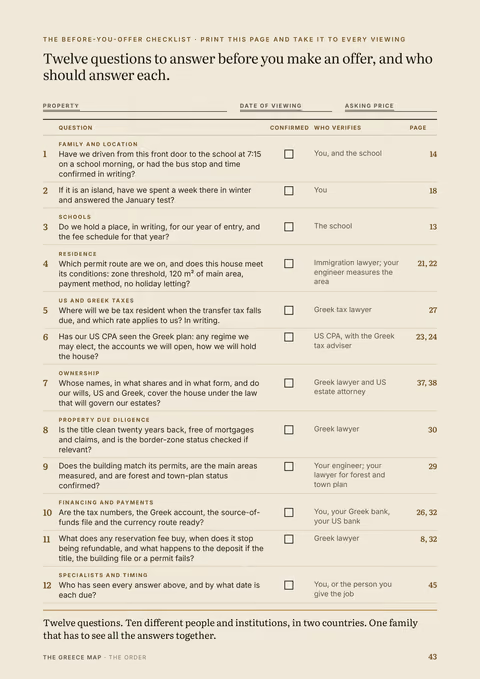
In Greece, six professionals take part in a typical purchase. Count the ones who work for you.
- The notary is a neutral public officer. On some new developments, the seller chooses the notary.
- The agent is paid on success, often by both sides, and represents you only if that is agreed in writing.
- The engineer's certificate, the one that says the building matches its permits, is issued for the seller.
- The surveyor and the bank check a boundary and a transfer. Neither checks the rest.
- Your lawyer and your engineer work for you. Two of the six, and only if you appoint them yourself, not the ones who came with the house.
Nobody at that table is asked whether this is the right decision for your family.
Take four habits, each sound practice in the United States.
- Joint tenancy. At home, the survivor takes the whole house automatically. We found no source showing that this form can be registered in Greece. If it cannot, the deed alone does not protect your spouse.
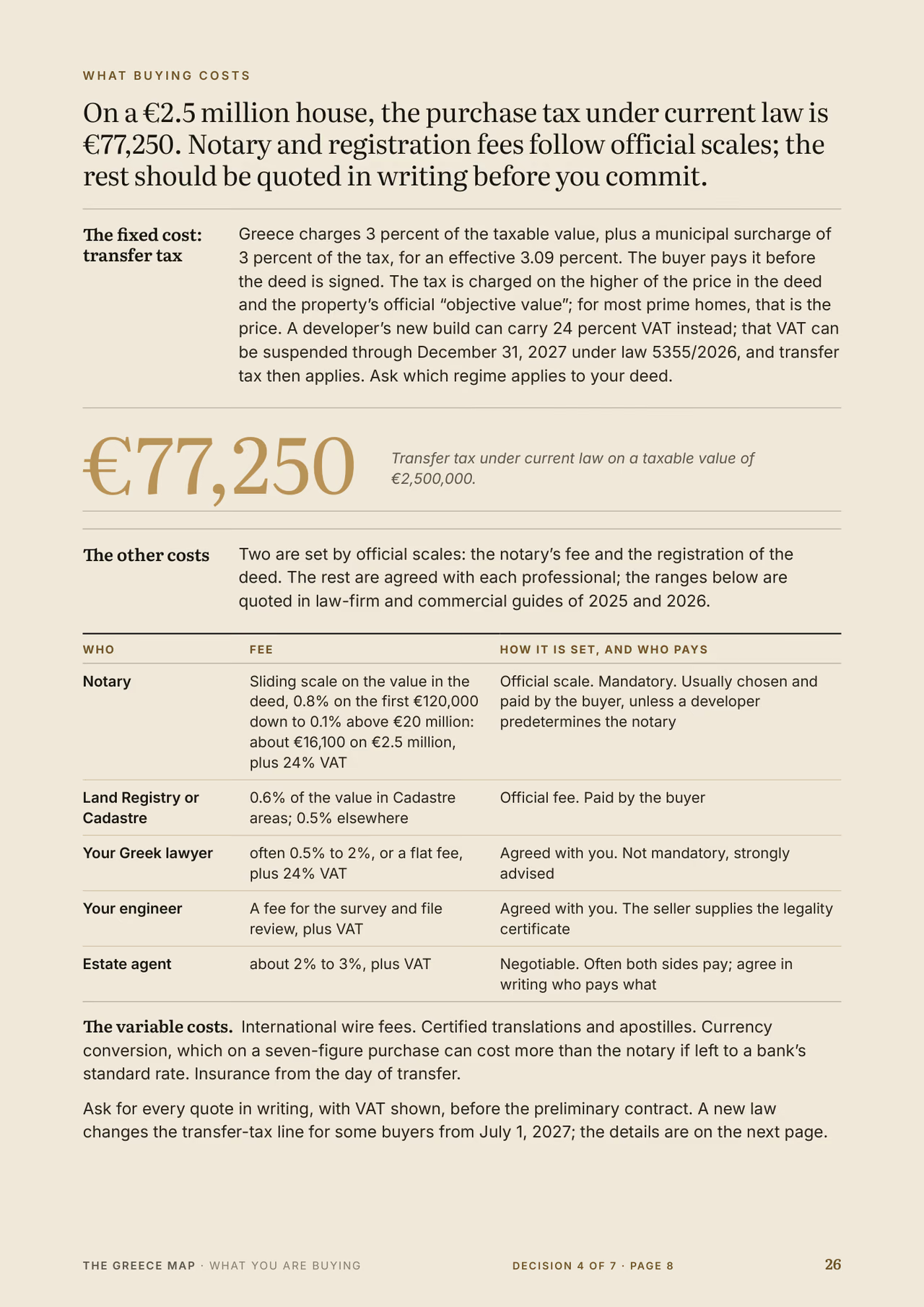
- An LLC. A company holding Greek property owes a special tax of 15 percent of the property's value every year, unless it qualifies for an exemption. On €2.5 million, that is €375,000 a year.
- A revocable trust. Greece has no domestic law of trusts. A US trust holding Greek land directly raises questions of recognition and registration.
- A will that leaves everything to your spouse. If Greek law governs your estate, your children keep a protected share, as a claim in money against the heirs.
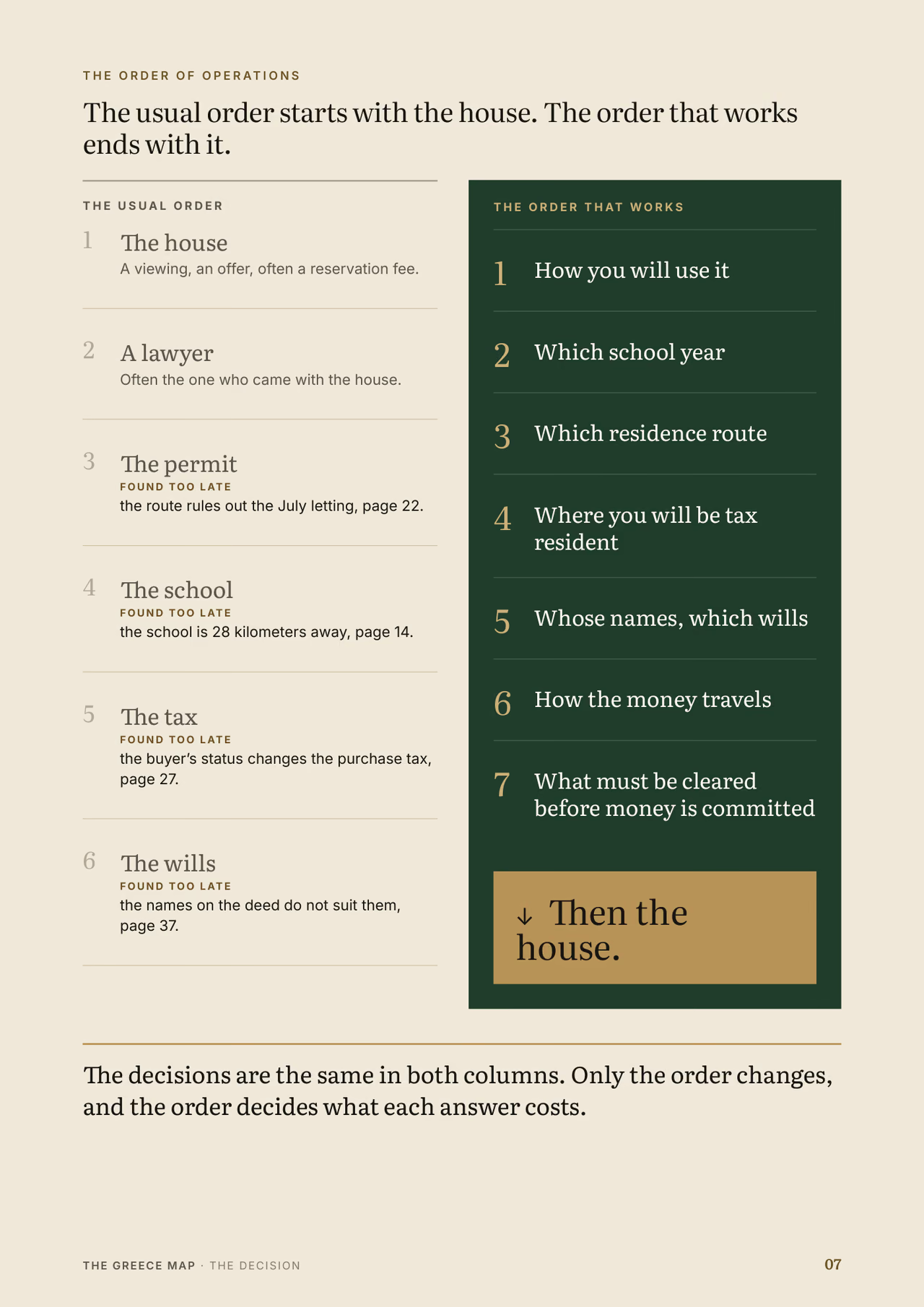
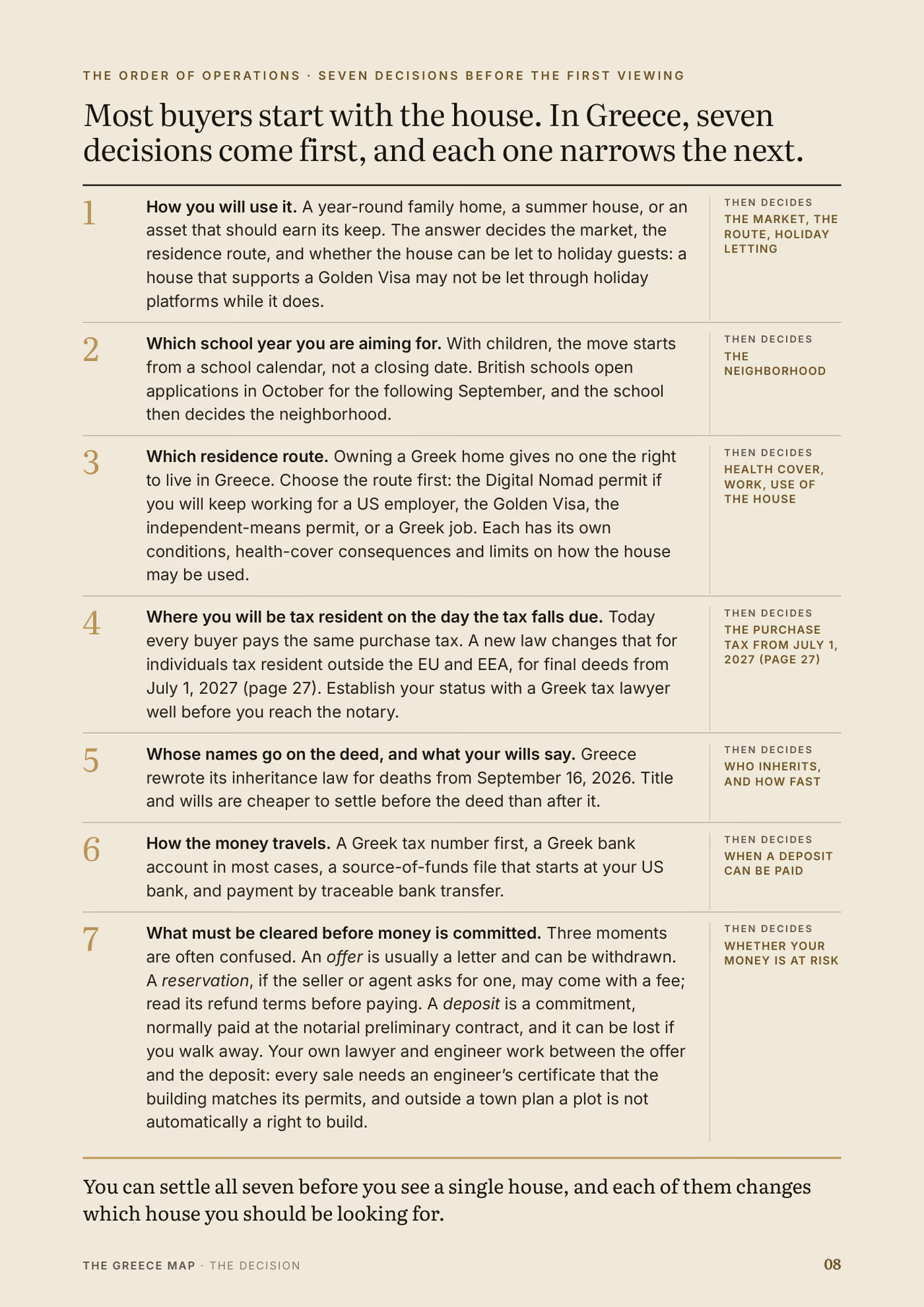
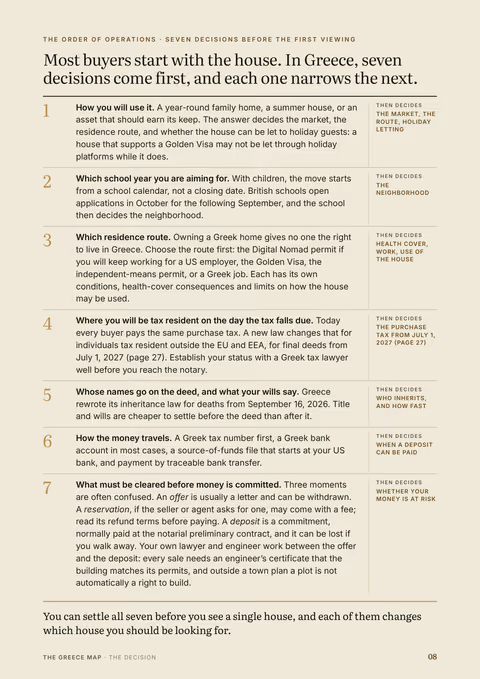
And some steps have no way back. A deposit can be lost if you walk away. Names on a deed are far easier to settle before the notary than to change afterward.
None of this is hidden. Each point is known to one professional or another. What is missing is the person who sees all of it together, for your family, before the deposit.
That is the work I do for families. I lead the whole purchase, choose each professional with them, and stay beside them to the signature and after. They make the decisions and they sign.
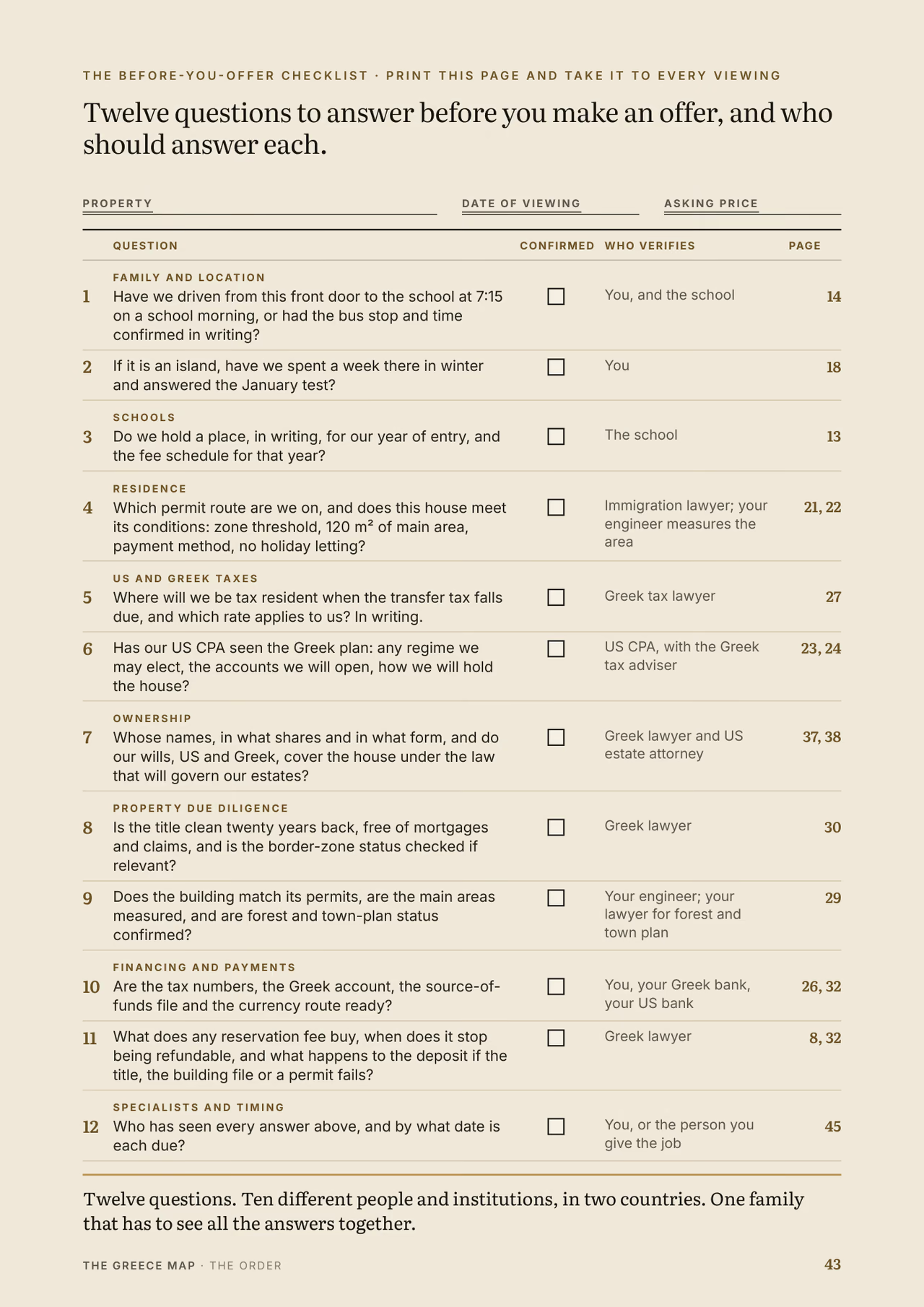
You need a good agent and a good lawyer, each chosen by you. And some families need nobody else at all: page 44 says plainly when those two are enough.
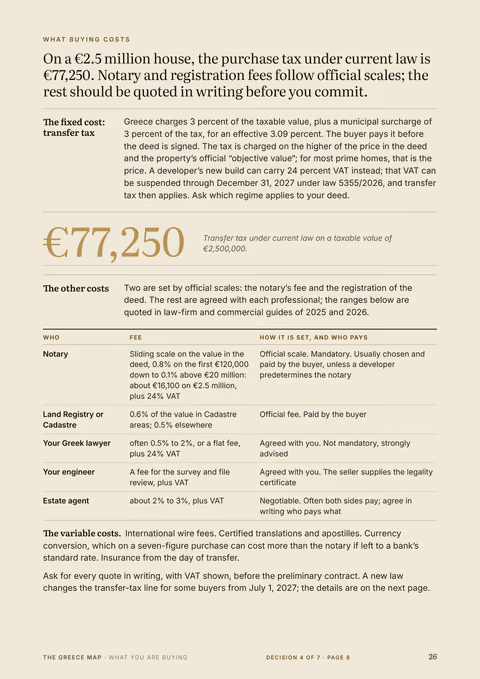
The Greece Map is where I would start. Fifty pages: who checks what and who each one works for, what the purchase really costs line by line, the deed and inheritance, where families live in Athens and on the islands, and the four ways to stay. For each point, it tells you which licensed professional to ask.
It is free. Read it before you make an offer.
P.S. Start with page 30: the six professionals, and what each one checks. Then page 6: one house, three American households, three very different deals. Together they take five minutes, and they may change whom you appoint first.