


A letter from the author of The France Map
Dear future homeowner in France,
Imagine you have found the apartment.
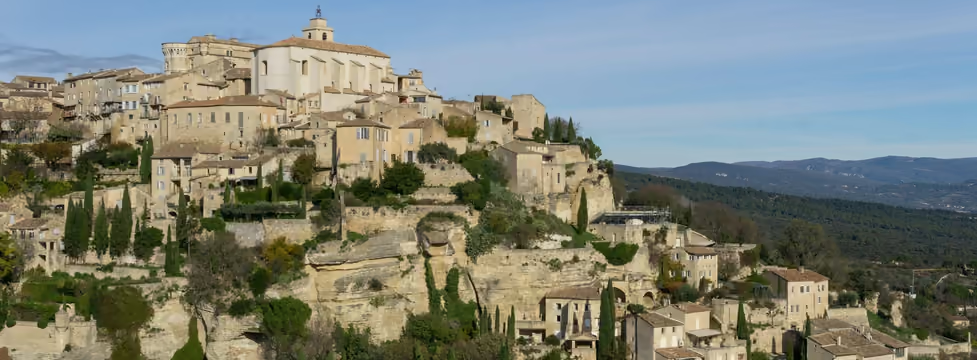
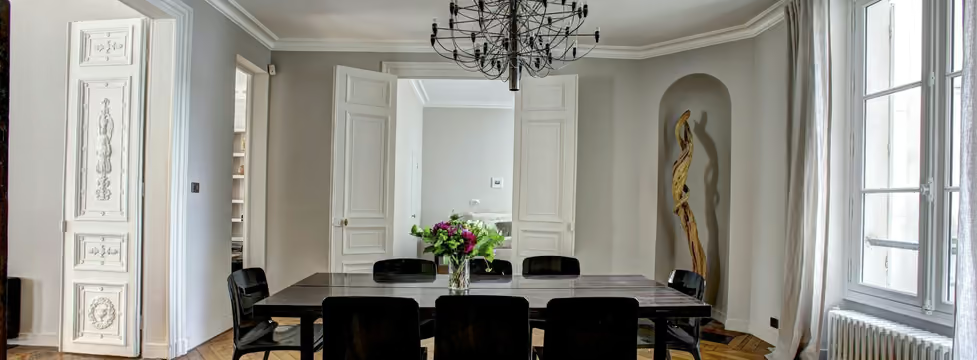
130 square meters in the 7th, tall windows, a ten-minute walk to the Seine. Or a stone mas below a Luberon village where you can already picture the family at the table in July. The price fits the budget. The light is better than the photographs. The agent is enthusiastic.
You will do what you would do at home. You will agree on a price, sign the paper put in front of you, and wire the funds when the closing email arrives.
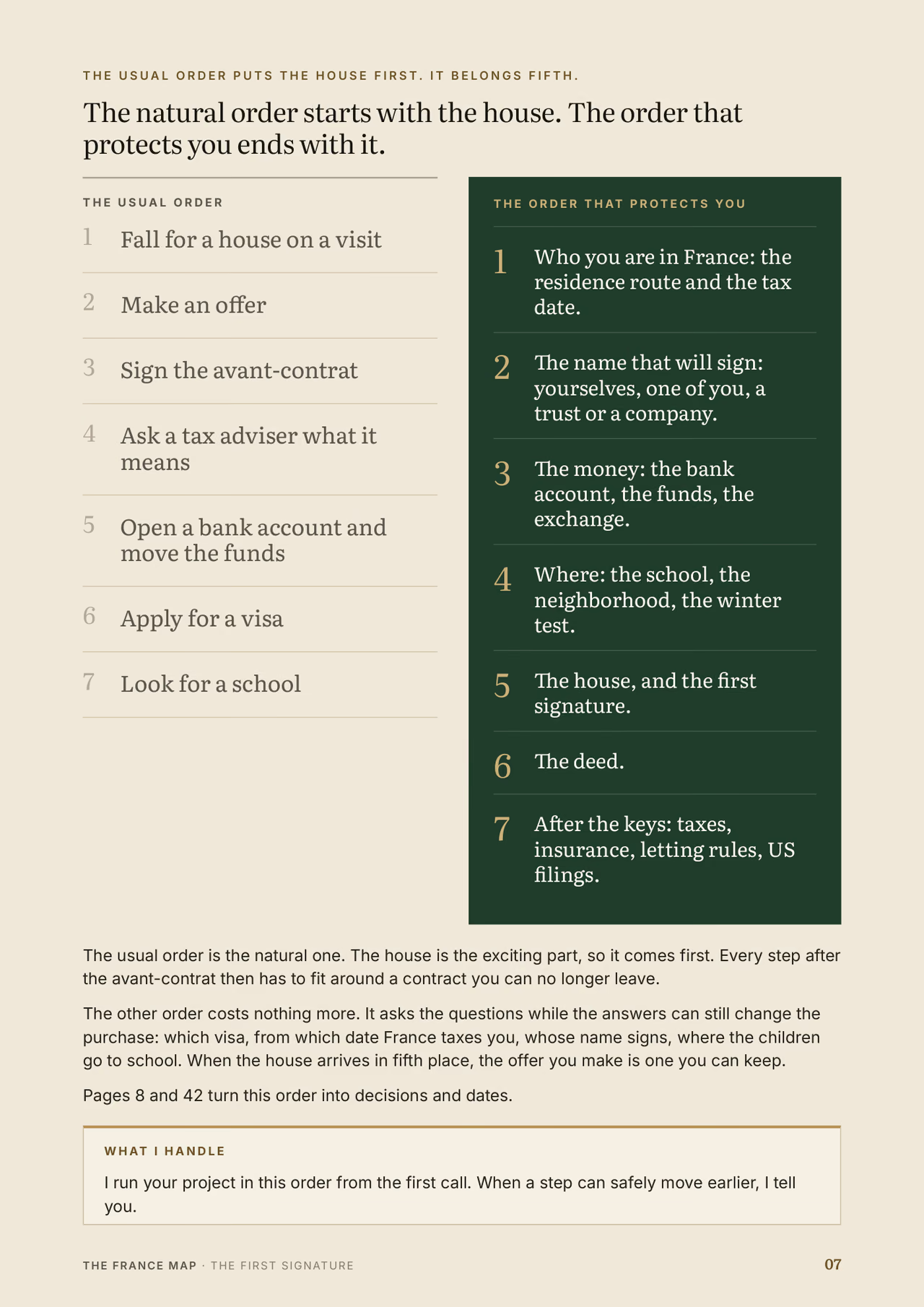
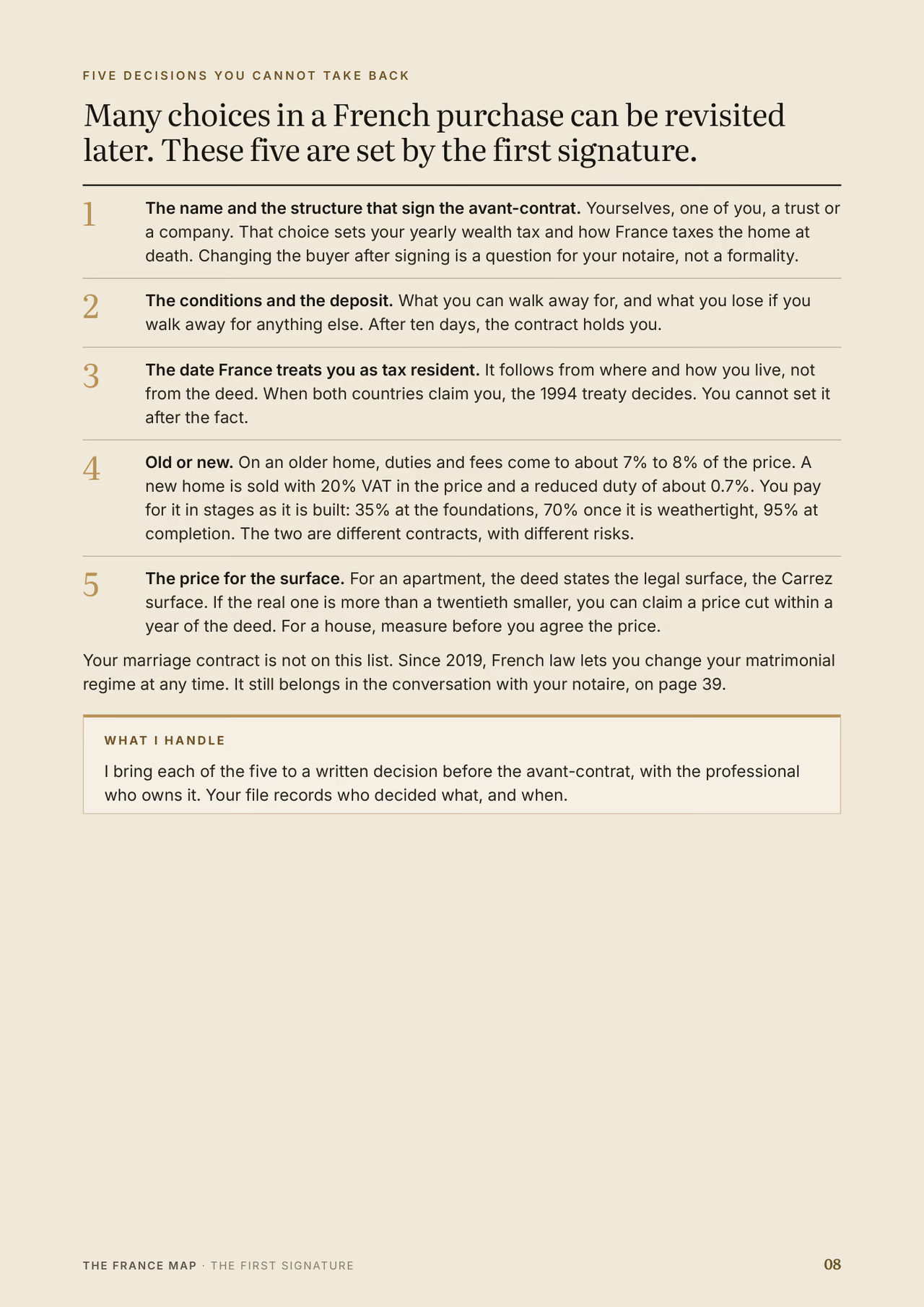
In France, that paper is the avant-contrat, and it comes two to three months before the deed. The decision is taken there. The deed only carries it out. Count the people at the table who work for you.
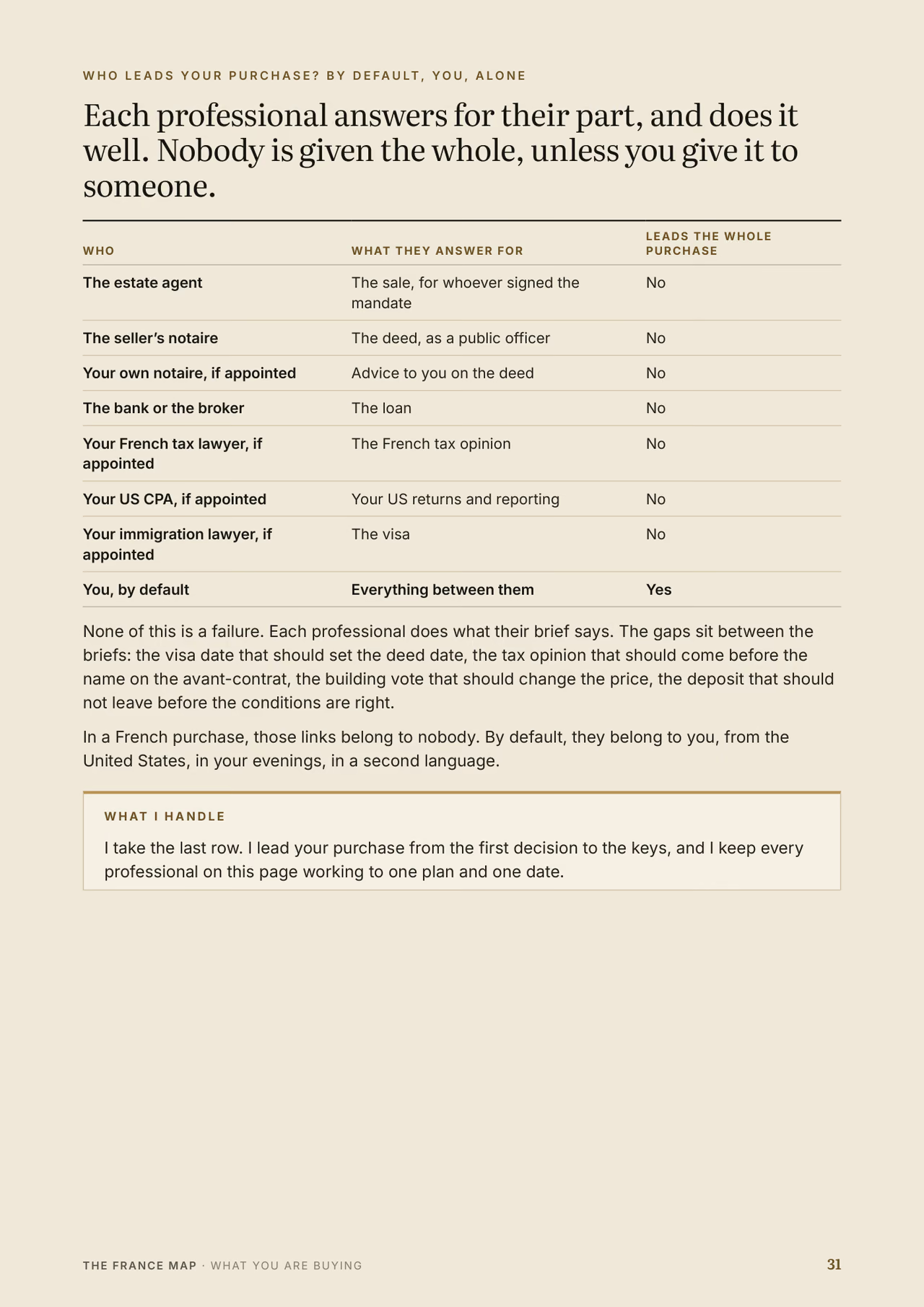
- The agent works for whoever signed the mandate, usually the seller.
- The seller's notaire is a public officer: neutral and impartial, which is not the same as your advocate.
- The bank lends, on its own terms.
- The commune can buy the property in your place within two months.
- Your own notaire, and a broker if you use one, work for you. Two of them, and only if you appoint them yourself.
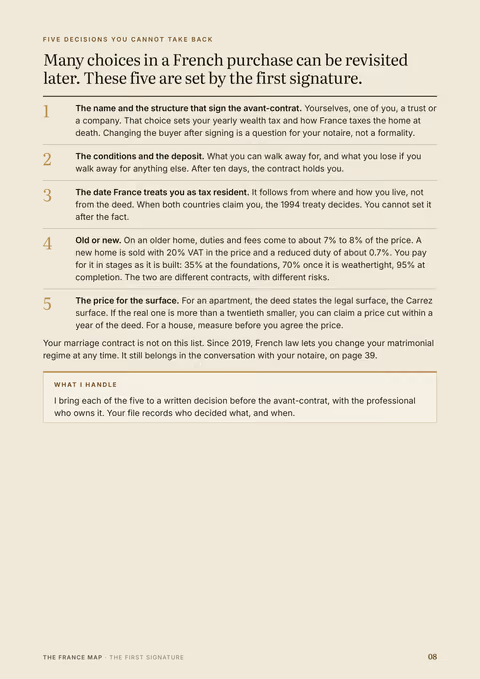
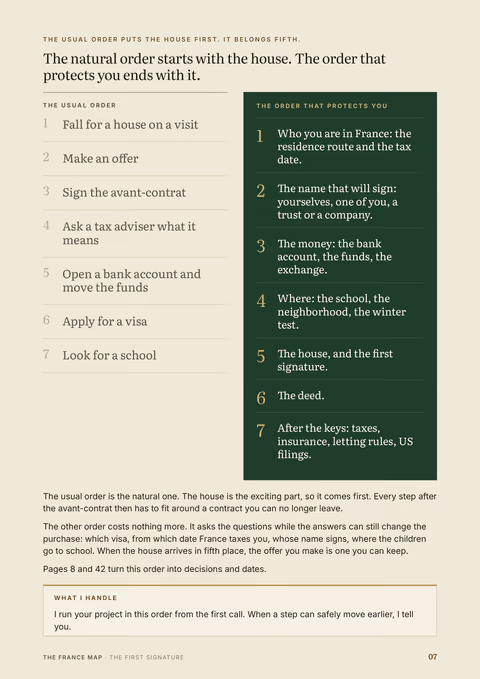
Nobody is asked to decide, for you, whose name goes on the deed, from which date France counts you as resident, or what your American wills say about a French home.
Take five habits, each sound practice in the United States.
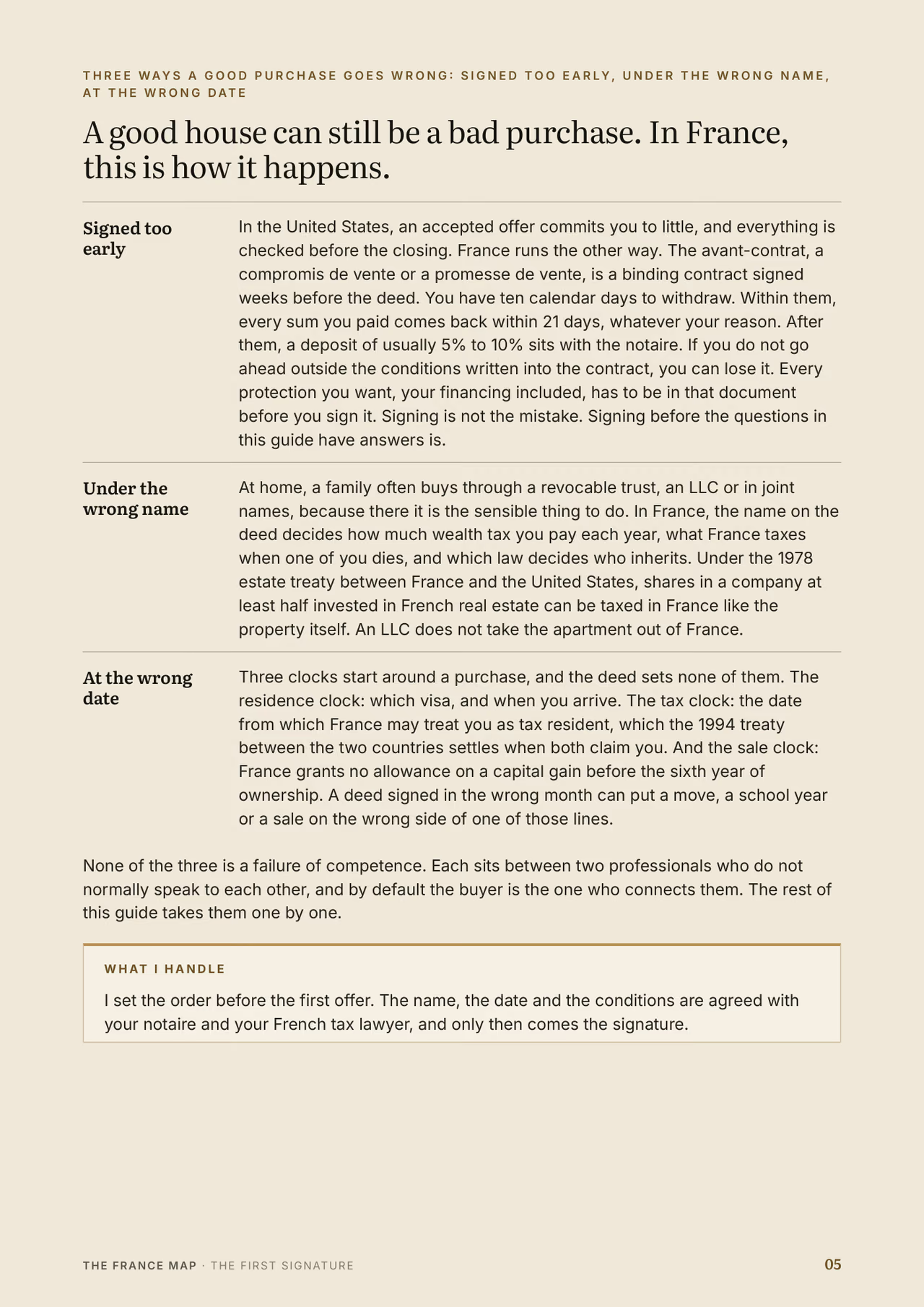
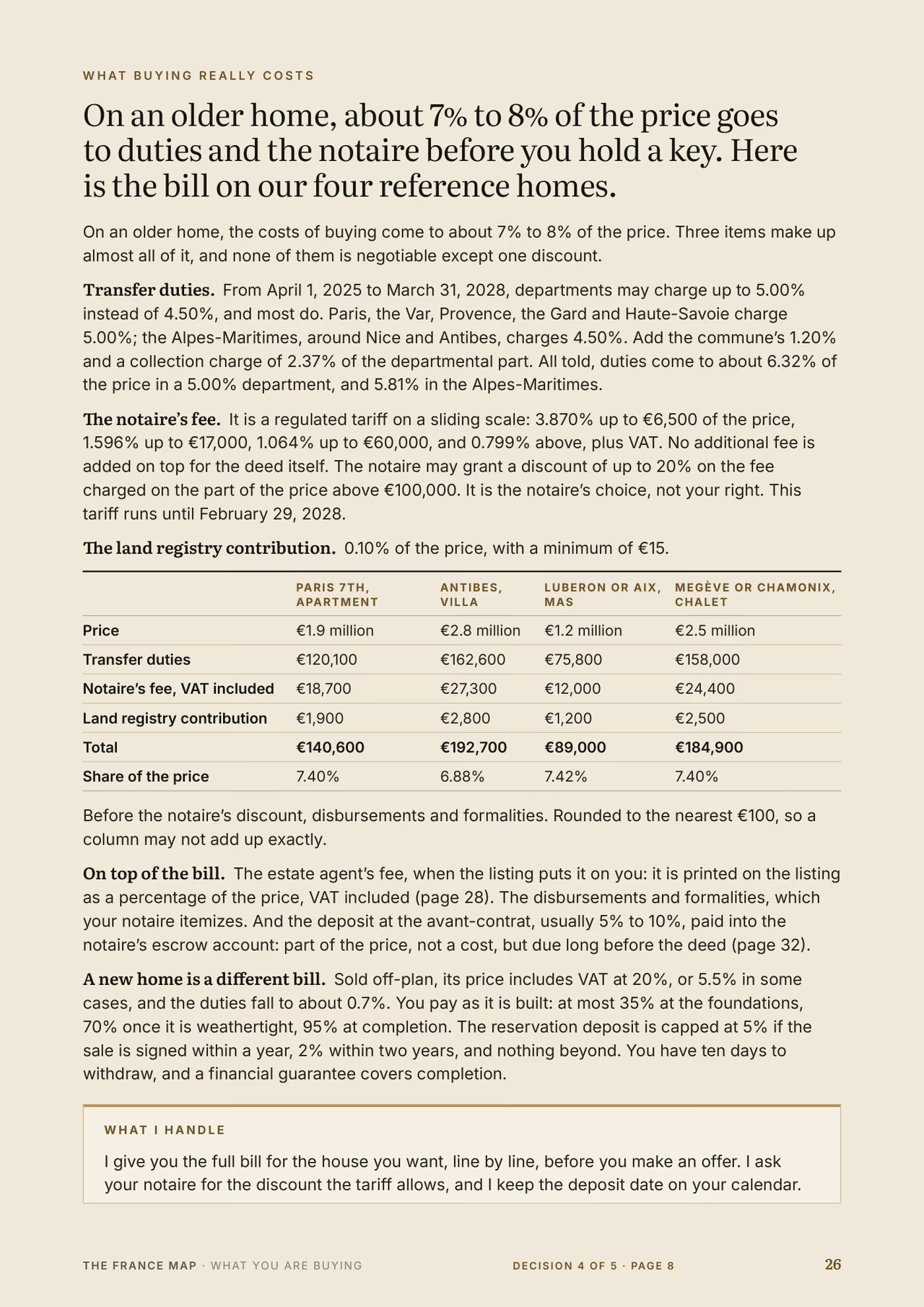
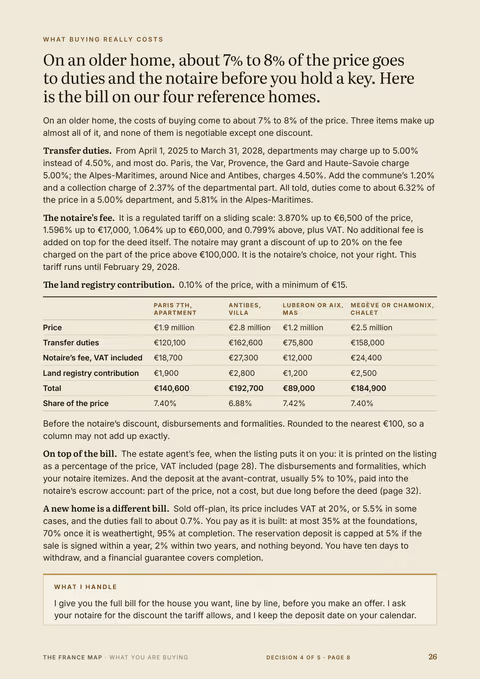
- Signing once the price is agreed. After ten days, a deposit of usually 5% to 10% is at stake, months before the deed.
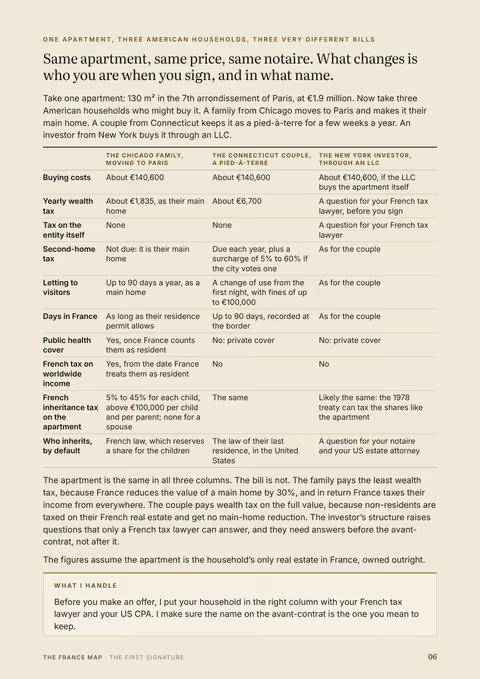
- An LLC, a revocable trust or joint names. In France, each one brings a different yearly wealth tax and a different estate. An LLC does not take the apartment out of France.
- Letting the place while you are away. In Paris, that is a change of use from the first night, with fines of up to €100,000.
- Spending the summer on your passport. Ninety days, now recorded at the border. Owning a home adds none.
- Wiring the funds when the closing email arrives. Genuine notaire addresses end in @notaires.fr or .notaires.fr, and every transfer is confirmed by telephone.
None of this is hidden. Each point is known to one professional or another. What is missing is the person who sees all of it together, for your family, before the first signature.
That is the work I do for families. I lead the whole purchase, choose each professional with them, and stay beside them to the keys and after. You make the decisions and you sign. Everything between those moments is ours to carry.
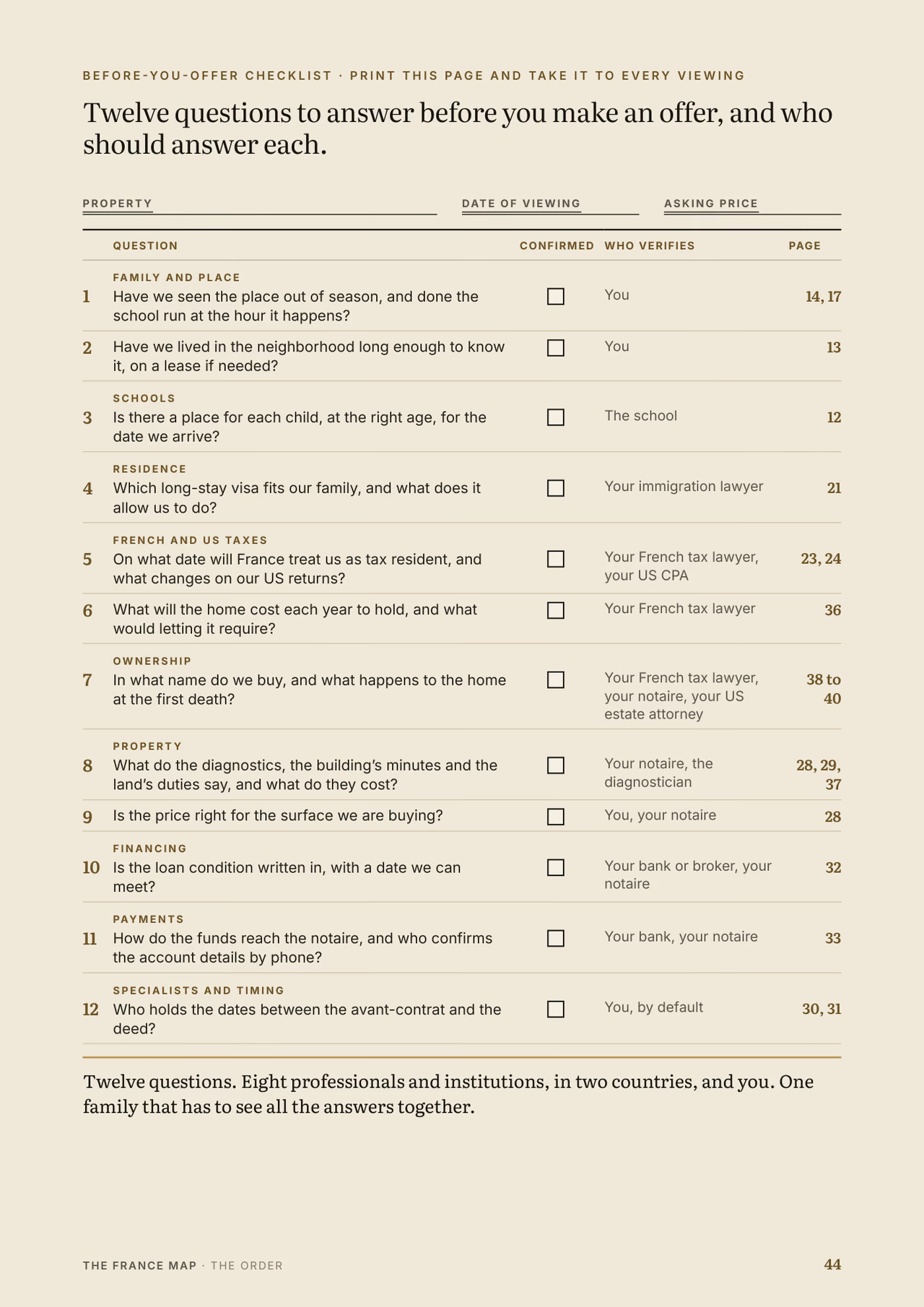
Your notaire signs the deed. Your French tax lawyer signs the opinion. I find them, you appoint them, and I hold them to the date. And some families need nobody else at all: page 45 says plainly when your own notaire, a French tax lawyer and your US CPA are enough.
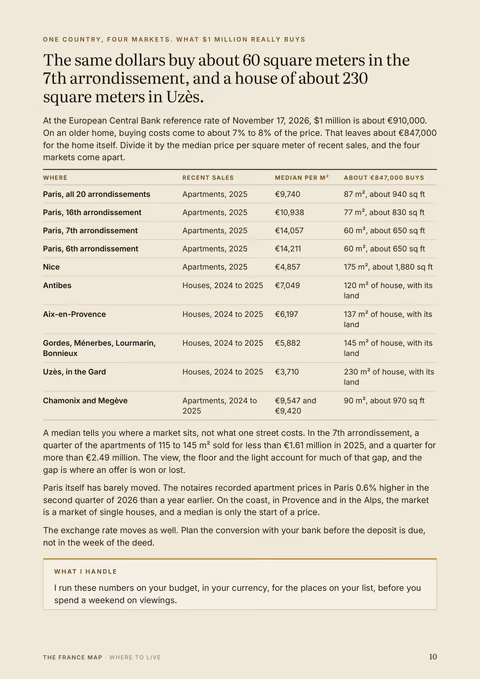
The France Map is where I would start. Fifty-one pages: who works for whom, what the purchase really costs line by line, the first signature and the deed, the name and the inheritance, what $1 million buys in Paris, on the Riviera, in Provence and in the Alps, and how long you may stay. For each point, it tells you which licensed professional to ask.
It is free. Read it before you sign anything.
P.S. Start with page 30: the seven parties at a French purchase, and who each one works for. Then page 6: one apartment, three American households, three very different bills. Together they take five minutes, and they may change whom you appoint first.